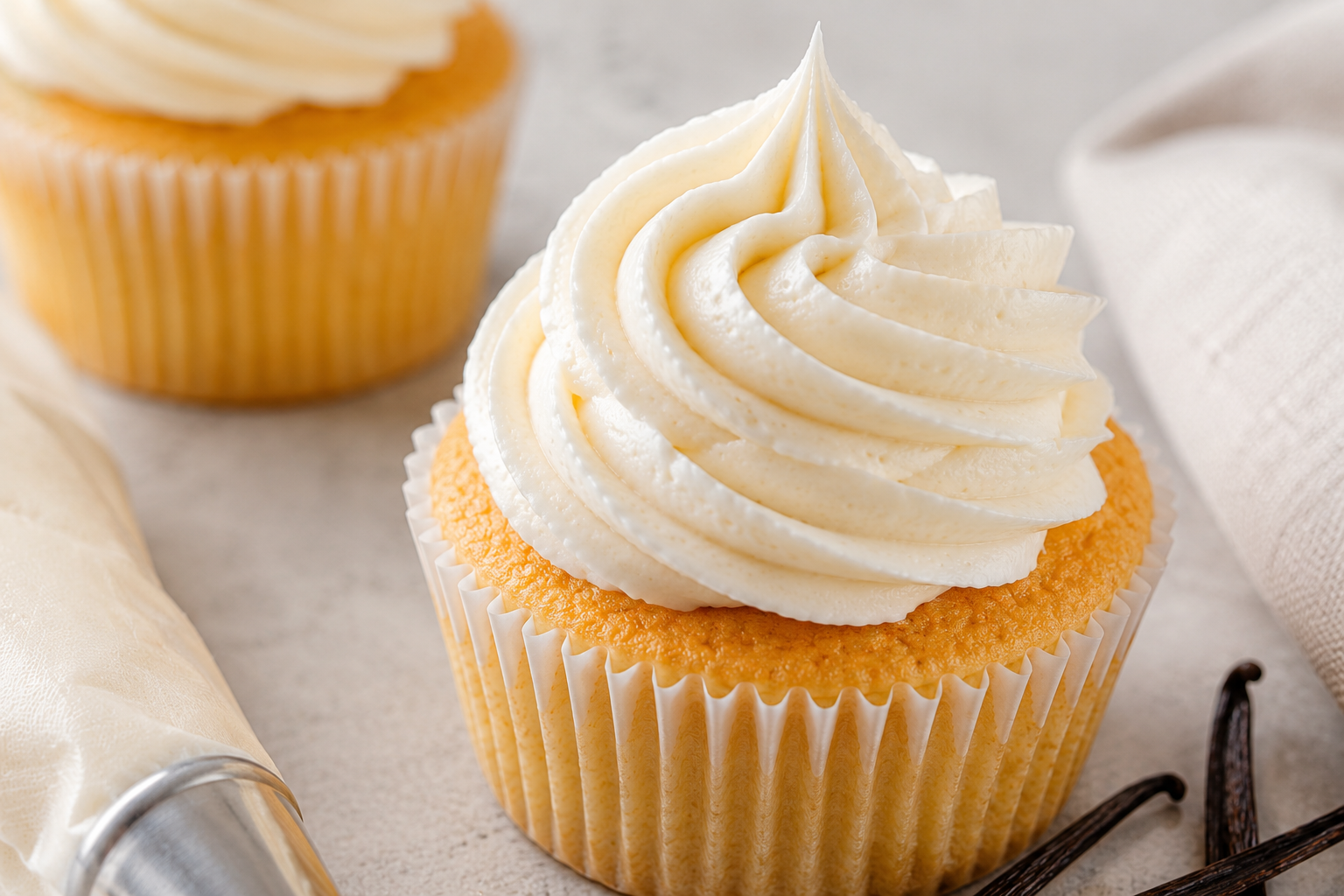
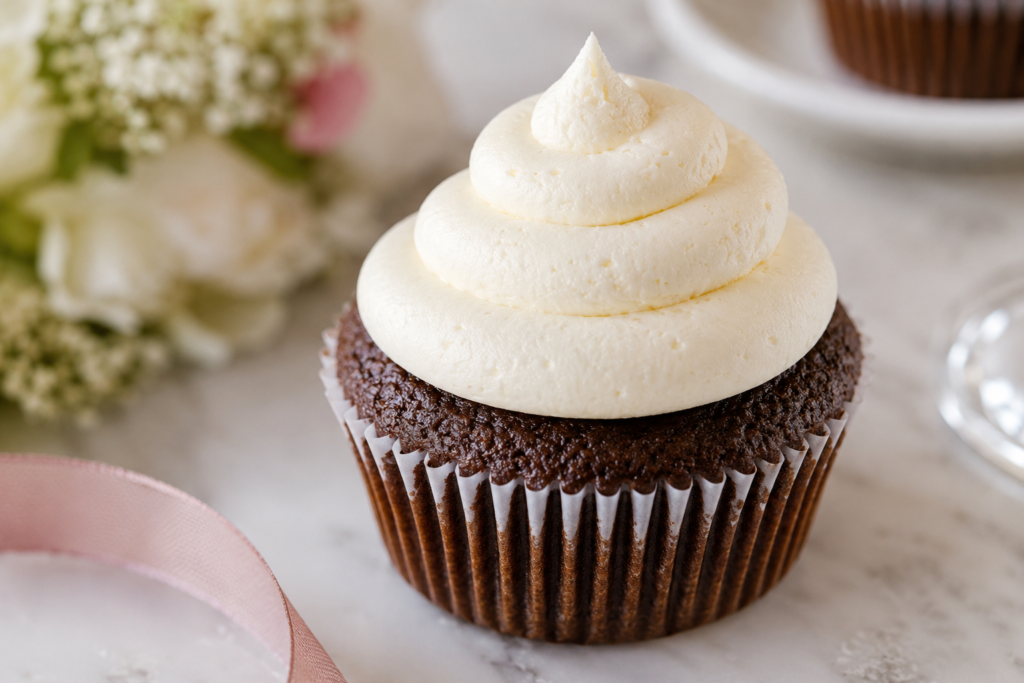
A good vanilla buttercream can make almost any dessert feel celebration-ready. This American buttercream frosting is the kind of simple, dependable recipe that turns basic cupcakes, birthday cakes, brownies, and sugar cookies into something instantly more special. It comes together with a short ingredient list, a single mixing bowl, and about 10 minutes of hands-on time.
What makes this frosting so popular is how approachable it is. There is no stovetop step, no egg whites, and no complicated technique. You start with softened butter, beat it until fluffy, add powdered sugar and vanilla, then loosen it with a little milk or cream until it reaches the texture you want.
Flavor-wise, this is classic American buttercream: sweet, buttery, vanilla-forward, and nostalgic in the best way. The source describes it as light, fluffy, and sweet, with a slight graininess that can happen because of the powdered sugar.
It is also a very flexible frosting recipe. Once you have the basic vanilla version down, you can change it with different extracts, citrus, jam, berries, crushed cookies, nuts, candy, or chocolate chips. That makes it especially useful for home bakers who want one base recipe they can dress up for different desserts and holidays.
This frosting is a practical choice for cakes that need to sit out for a while too. The source notes that American buttercream and frosted cakes or cupcakes can stay at room temperature for a couple of days, as long as the dessert does not contain a filling that needs refrigeration and the room is not too warm.
Another reason to keep this recipe close is the yield. One batch generally gives about 3 to 4 cups of frosting, which is enough for 12 to 16 piped cupcakes, 24 knife-frosted cupcakes, a 6- or 8-inch two-layer cake, or a 9 x 13-inch sheet cake. That kind of flexibility makes it a great everyday frosting to memorize.
If you are looking for a frosting that is easy, fluffy, and endlessly useful, this is exactly the kind of recipe worth saving. It is a go-to for beginner bakers, busy party prep, and those moments when all you really need is a reliable vanilla frosting that just works.
Quick Intro Summary
Classic buttercream frosting · Cakes, cupcakes, cookies, and bars · Quick, fluffy, and easy to customize.
Recipe Overview
- Prep Time: 10 minutes
- Cook Time: 0 minutes
- Total Time: 10 minutes
- Servings: About 24 portions, or roughly 3 to 4 cups frosting
- Calories: 147 per serving, based on 1/24 of the batch
- Course: Dessert
- Cuisine: American
A single batch generally covers 12 to 16 piped cupcakes, 24 cupcakes spread with a knife, one 6- or 8-inch two-layer cake, or one 9 x 13-inch cake.
Why You’ll Love This Recipe
- It uses a short list of pantry staples: butter, powdered sugar, vanilla, and a little milk or cream if needed.
- It comes together in one bowl with a hand mixer or stand mixer.
- The texture is light and fluffy when you beat it long enough.
- You can flavor it in lots of different ways, from citrus to mint to cookie mix-ins.
- It works on cupcakes, cakes, macarons, sugar cookies, brownies, and bars.
- It stores well in both the fridge and freezer, so you can make it ahead.
Ingredients
For the vanilla buttercream
- 1 cup unsalted butter, softened
- 16 ounces powdered sugar, about 3 1/2 to 4 cups
- 2 teaspoons vanilla extract
- 1 to 2 tablespoons milk or heavy cream, plus more if needed
- Pinch of salt, optional, especially if using unsalted butter
Optional ingredient notes
- Salted butter can be used, but then the extra pinch of salt is not necessary.
- Shortening can replace part or all of the butter, and the source notes it can be helpful if the frosting needs to hold up in warmer conditions.
How to Make It
- Add the softened butter to a large bowl or the bowl of a stand mixer. Beat it on medium-high speed until it looks pale and airy, about 4 to 5 minutes. Scrape the bowl if needed halfway through.
- Turn the mixer off and add the powdered sugar and vanilla. Start mixing on low so the sugar does not fly everywhere. At first, the mixture will look dry and crumbly. That is normal.
- Once the sugar is incorporated, increase the speed to medium or medium-high and keep beating for another 3 to 4 minutes until the frosting turns noticeably lighter and fluffier.
- Check the consistency. If the buttercream feels too stiff for spreading or piping, add milk or cream a little at a time, about 1/2 tablespoon per addition, until it feels just right.
- Use immediately on cakes, cupcakes, cookies, brownies, or bars, or store it for later and rewhip before using.
Recipe Notes and Tips
Softened butter is important, but you do not want it greasy or melted. The source recommends butter that is room temperature or even slightly cooler so the frosting stays fluffy instead of loose.
Do not rush the mixing time. Beating the butter well before adding sugar, and then again after the sugar goes in, helps create a lighter texture and reduces some of the graininess from the powdered sugar.
If your powdered sugar feels lumpy, sift it first. That one extra step helps you get a smoother frosting and makes the final texture look more polished.
Always add liquid gradually. If you pour in too much milk or cream at once, the frosting can get too loose fast. The source recommends fixing an over-thinned batch by mixing in a bit more powdered sugar.
Gel food coloring is the better choice if you want bright shades. The source recommends gel over liquid because it gives stronger color without thinning the frosting as much.
Easy Variations
- Swap the vanilla for almond, lemon, maple, mint, or another extract you enjoy, starting with a small amount and adjusting to taste.
- Stir in jam, lemon curd, cooked berries, or freeze-dried berries for a fruit-forward version.
- Use citrus juice and zest in place of part of the liquid for a brighter frosting.
- Fold in crushed cookies, candy, chopped nuts, or mini chocolate chips for a fun texture twist.
- Try a lavender-honey version by reducing the vanilla and adding lavender extract plus honey, one of the flavor ideas specifically suggested in the source.
What to Serve With It
This frosting works beautifully on vanilla or chocolate cupcakes, birthday cakes, sugar cookies, macarons, brownies, and dessert bars. It is especially handy when you want one frosting recipe that can stretch across several different bakes for parties or holidays.
Storage and Reheating
Store leftover buttercream tightly covered in the refrigerator for 1 to 2 weeks, or freeze it for up to 3 months. The source recommends using an airtight container or freezer bag so the butter does not absorb refrigerator or freezer odors.
When you are ready to use it again, let it come back to room temperature and then remix until fluffy. No reheating is needed, just time to soften and a quick whip to restore the texture.
FAQs
Why does my frosting look dry and powdery at first?
That is normal in the early mixing stage. The source says to keep going, because it comes together after the powdered sugar fully blends with the butter.
How much can one batch frost?
Generally, one batch covers 12 to 16 piped cupcakes, 24 cupcakes spread with a knife, one 6- or 8-inch two-layer cake, or one 9 x 13-inch cake.
Can American buttercream sit out at room temperature?
Yes. The source says the frosting and frosted cakes or cupcakes can stay out for a couple of days, as long as the room is cool and there is no perishable filling involved.
Will this frosting crust?
Yes. The source notes that American buttercream forms a light crust as it sits.
Can I reduce the sugar?
Yes, but the frosting will be less voluminous, more buttery, and less stable for piping or sitting out. The source suggests starting lower and adding sugar gradually until the sweetness feels right to you.
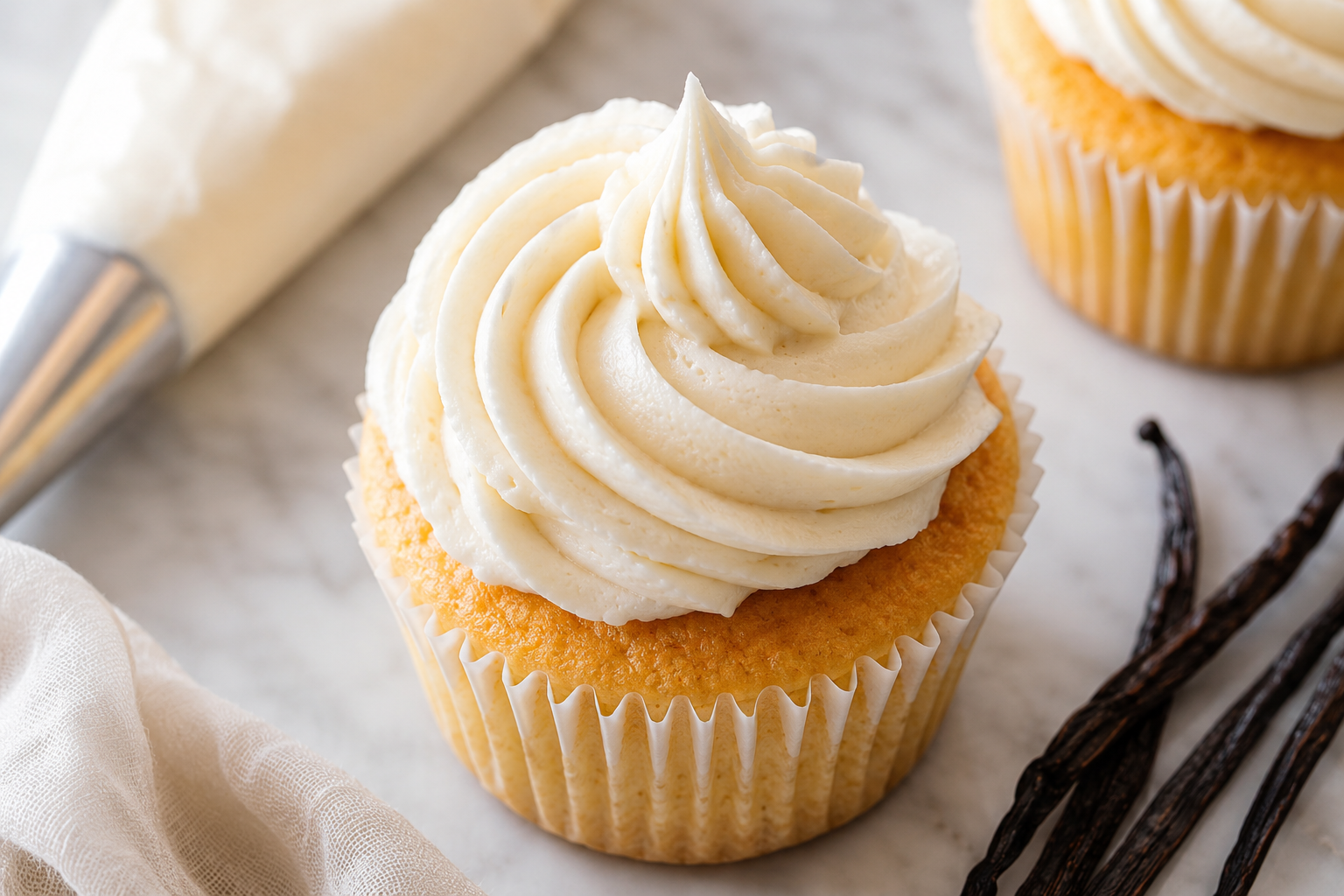
Best Vanilla Buttercream Frosting for Cakes and Cupcakes
Ingredients
Method
- Add the softened butter to a large bowl or the bowl of a stand mixer. Beat it on medium-high speed until it looks pale and airy, about 4 to 5 minutes. Scrape the bowl if needed halfway through.
- Turn the mixer off and add the powdered sugar and vanilla. Start mixing on low so the sugar does not fly everywhere. At first, the mixture will look dry and crumbly. That is normal.
- Once the sugar is incorporated, increase the speed to medium or medium-high and keep beating for another 3 to 4 minutes until the frosting turns noticeably lighter and fluffier.
- Check the consistency. If the buttercream feels too stiff for spreading or piping, add milk or cream a little at a time, about 1/2 tablespoon per addition, until it feels just right.
- Use immediately on cakes, cupcakes, cookies, brownies, or bars, or store it for later and rewhip before using.