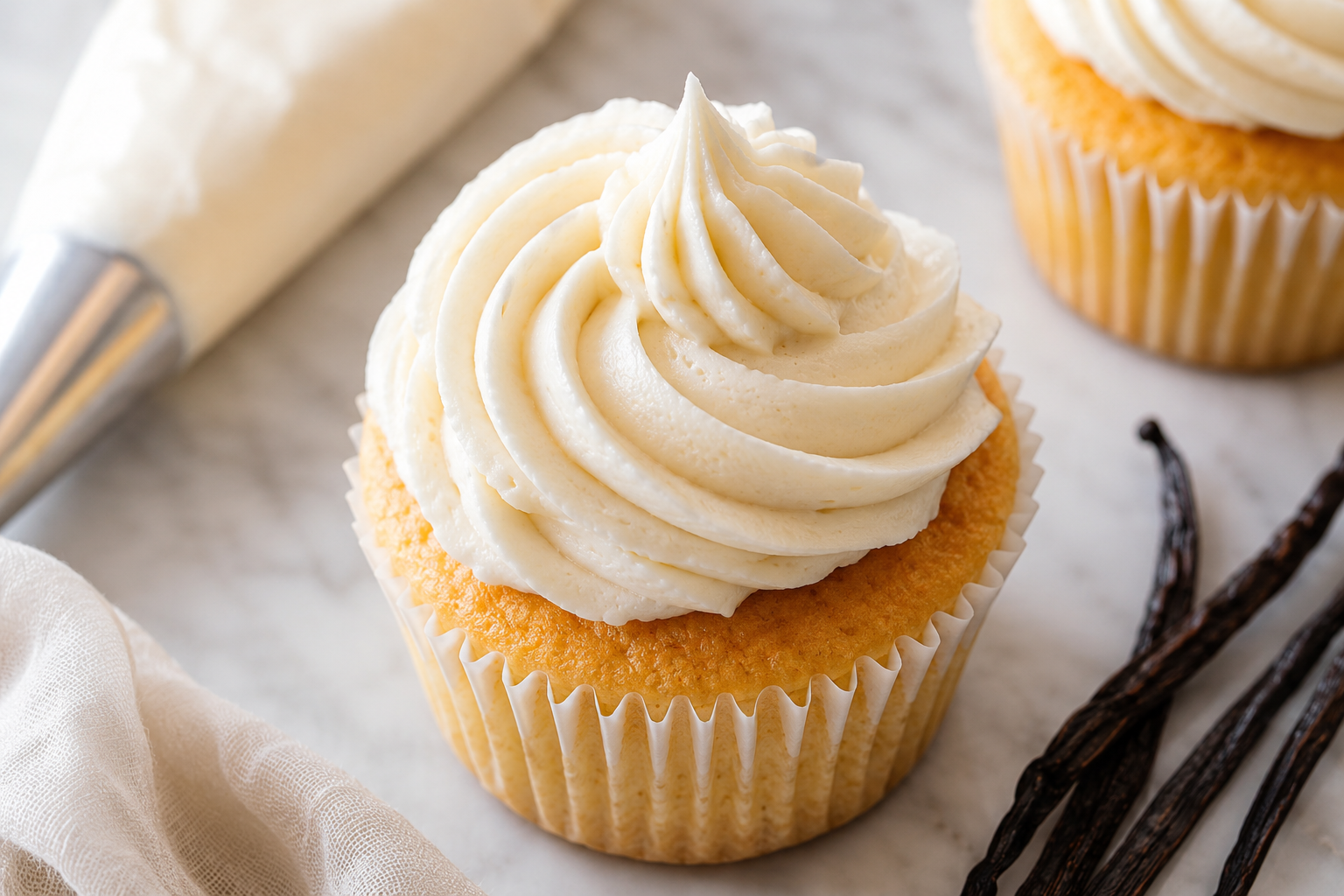
Ingredients
Method
- Add the softened butter to a large bowl or the bowl of a stand mixer. Beat it on medium-high speed until it looks pale and airy, about 4 to 5 minutes. Scrape the bowl if needed halfway through.
- Turn the mixer off and add the powdered sugar and vanilla. Start mixing on low so the sugar does not fly everywhere. At first, the mixture will look dry and crumbly. That is normal.
- Once the sugar is incorporated, increase the speed to medium or medium-high and keep beating for another 3 to 4 minutes until the frosting turns noticeably lighter and fluffier.
- Check the consistency. If the buttercream feels too stiff for spreading or piping, add milk or cream a little at a time, about 1/2 tablespoon per addition, until it feels just right.
- Use immediately on cakes, cupcakes, cookies, brownies, or bars, or store it for later and rewhip before using.
Notes
Softened butter is important, but you do not want it greasy or melted. The source recommends butter that is room temperature or even slightly cooler so the frosting stays fluffy instead of loose.
Do not rush the mixing time. Beating the butter well before adding sugar, and then again after the sugar goes in, helps create a lighter texture and reduces some of the graininess from the powdered sugar.
If your powdered sugar feels lumpy, sift it first. That one extra step helps you get a smoother frosting and makes the final texture look more polished.
Always add liquid gradually. If you pour in too much milk or cream at once, the frosting can get too loose fast. The source recommends fixing an over-thinned batch by mixing in a bit more powdered sugar.
Gel food coloring is the better choice if you want bright shades. The source recommends gel over liquid because it gives stronger color without thinning the frosting as much.